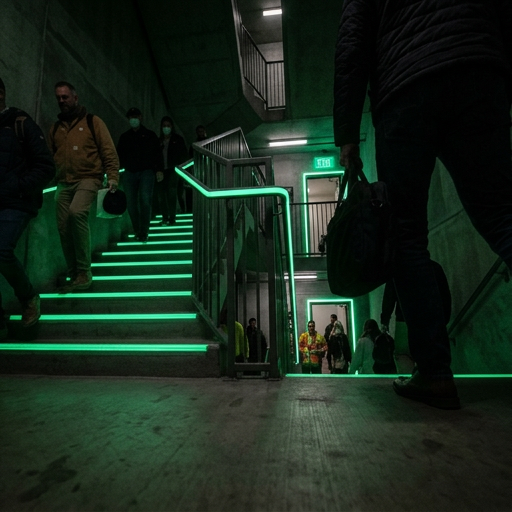
Illuminating Safety: A Comprehensive Guide to NYC Local Law 26 and Photoluminescent Egress Marking Standards
Illuminating Safety: A Comprehensive Guide to NYC Local Law 26 and Photoluminescent Egress Marking Standards
Introduction: The Life-Saving Glow in the Dark
In the critical moments of an emergency evacuation, when power fails and smoke obscures visibility, the difference between life and death can come down to a simple question: Can people find their way out? Photoluminescent egress markings represent a revolutionary approach to building safety—one that doesn’t rely on electricity, batteries, or any external power source. These specialized materials absorb ambient light during normal conditions and emit a sustained, visible glow in darkness, creating a luminous pathway that guides building occupants to safety when they need it most.
Photoluminescent technology harnesses the natural properties of certain materials that can store light energy and release it gradually over time. Unlike traditional emergency lighting systems that depend on backup generators or battery power—both of which can fail during catastrophic events—photoluminescent markings provide a passive, fail-safe solution that works 24/7, 365 days a year. This technology has proven particularly crucial in high-rise buildings, where evacuations can be complex, time-consuming, and fraught with challenges, especially when conventional lighting systems are compromised.
The implementation of photoluminescent egress marking systems represents a paradigm shift in how we approach building safety. Rather than viewing emergency egress as solely dependent on active systems, this approach recognizes the value of passive safety measures that require no maintenance, no power source, and no human intervention to function when disaster strikes. For building managers, facility professionals, and safety officers, understanding these systems and the regulations governing them is not just a matter of compliance—it’s a fundamental responsibility to the people who occupy their buildings.
Continued on next post.